1990-1995: Unlocking the gates to Southeast Asia’s oldest karst
Listen to this article
3 min 28 sec
The Phong Nha-Ke Bang Massif, located in Quang Binh Province, Central Vietnam, is one of the largest limestone massifs in the world and the oldest in Southeast Asia, with rocks dating back 450 million years. The exceptional purity of the limestone, combined with the region’s high annual rainfall, provides the perfect conditions for the development of massive underground river systems.
Systematic cave exploration began in 1990 through a collaborative framework between the British speleologist team led by Mr. Howard Limbert and Hanoi University.
1990: Unveiling the Ke Bang Massif hidden legacy
A team of nine British cavers, accompanied by three geologists from Hanoi University of Science, came to Phong Nha village. At this time, Phong Nha was a small, very poor village, with signs of the war evident everywhere. All their food had to be brought from outside as the village did not have enough to supply any extra people. The team began the exploration of Hang Phong Nha, and Hang Toi, two very spectacular river caves, accessed by boat along the Son River.
With these discoveries and experiencing the friendliness of the Vietnamese people, the team were determined to return.
Key Achievements
Phong Nha Cave: The team documented a massive river entrance 30 meters wide and 18 meters high. Using local oar-driven boats, they explored several kilometers of the main river passage. Approximately 700 meters inside, they discovered an ascending tunnel leading to a 1.5-kilometer fossil gallery. This upper level, abandoned by the river long ago, was filled with massive stalactites and "cauliflower" calcite formations.
Hang Toi (Dark Cave): Surveyed along the Chay River, the team mapped 4,500 meters of this system. They recorded an entrance 20 meters wide and documented a colossal chamber with a circumference of 500 meters. The presence of massive mud banks and flood debris on the ceiling confirms that this passage acts as a flood overflow for the Phong Nha system, carrying excess water during peak monsoon levels.
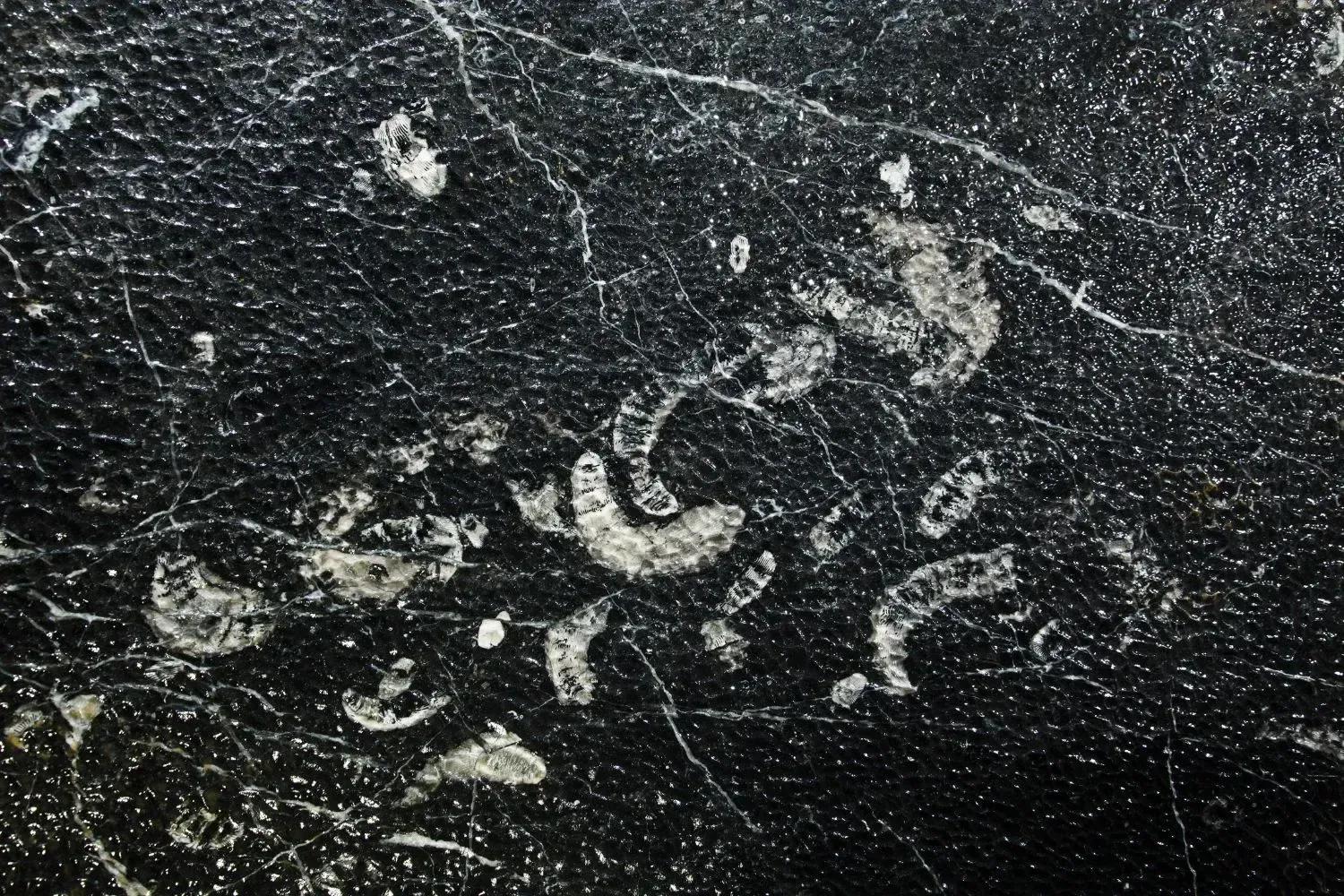
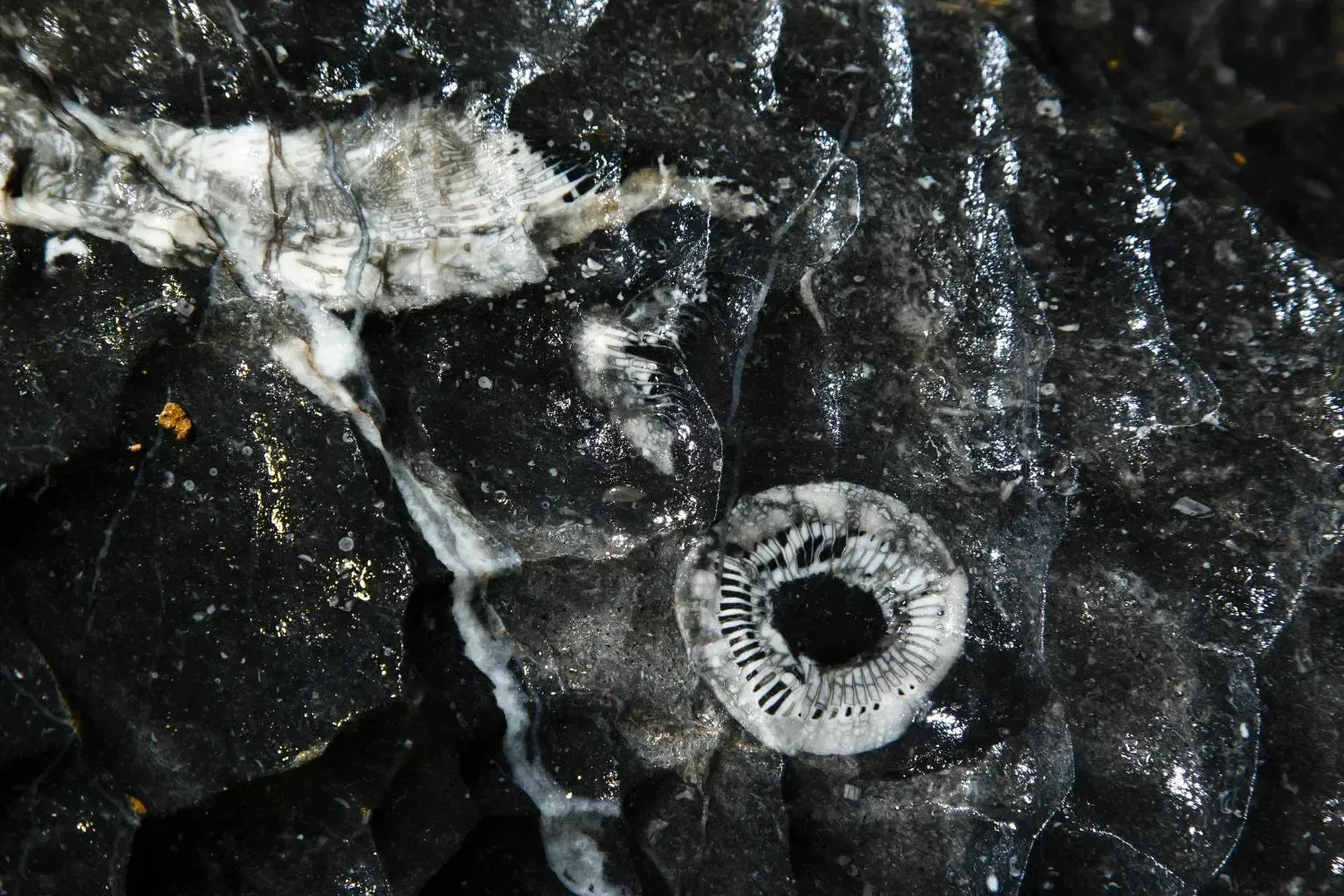
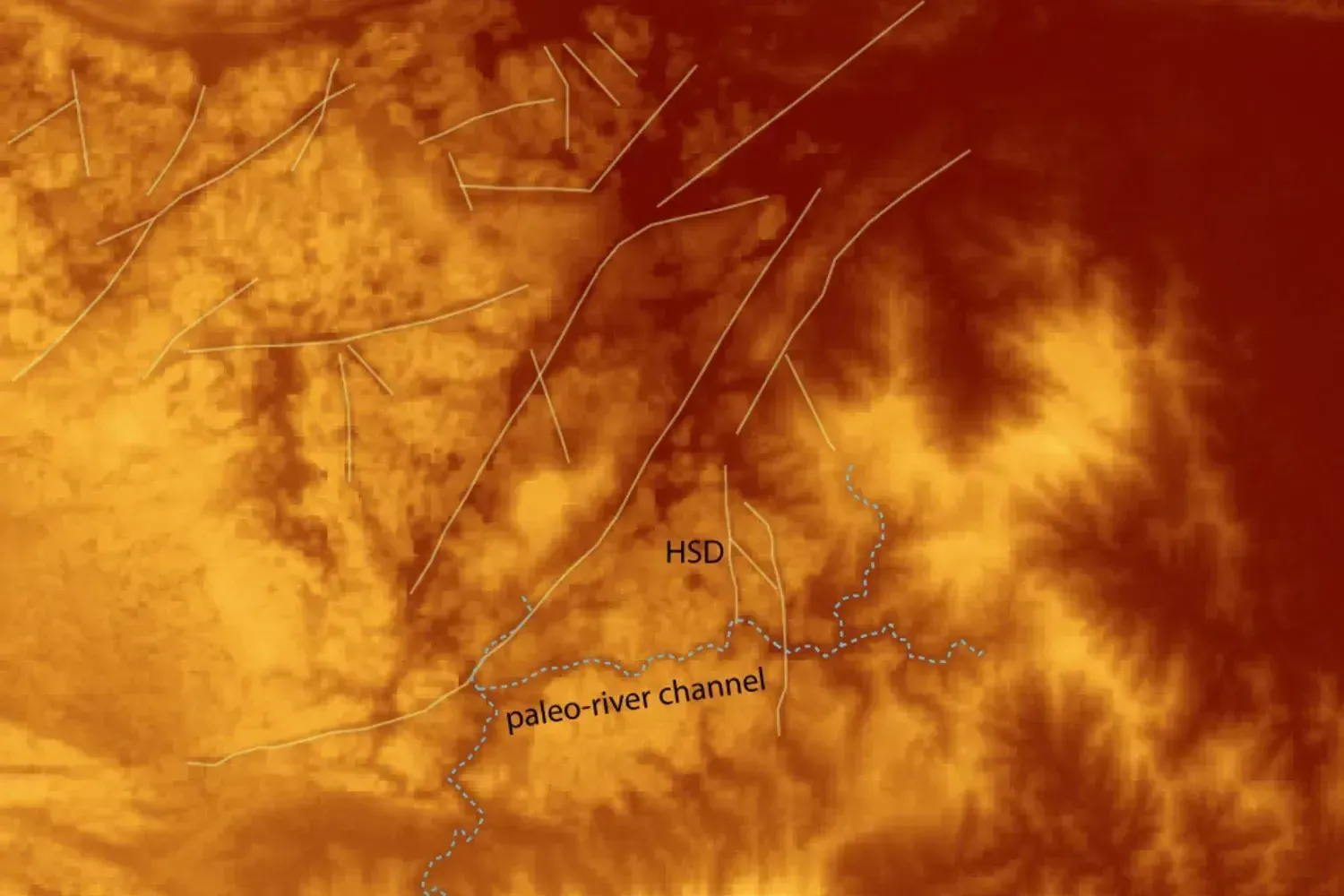
300-million-year-old coral fossils in Hang Son DoongClose-up of a 300-million-year-old tetra coral fossilFault lines obtained from NASA images showing the distinct North-South fault that formed Son Doong cave (HSD)
1992: In-depth exploration of the Phong Nha Cave Systems and a historic meeting with a National Legend, General Vo Nguyen Giap
A team of 12 returned to Phong Nha for a 6-week expedition with the Hanoi geologists. During this time, they explored Phong Nha Cave to its conclusion, and explored Hang Vom (part of which is Paradise Cave), Hang Tra Ang, Ruc Caroong, Ruc Mon, and Rat Cave. It was becoming clear that there were going to be several cave systems in this area.
During this expedition, the team members were very lucky to meet a true Vietnamese hero, Geeral Vo Nguyen Giap, who came to visit Phong Nha Cave. At this time, the local government was starting to think about Phong Nha Cave as a tourist attraction.
The expedition of this year successfully surveyed and mapped a total of 26,112 meters of cave passages.
Key Achievements
Phong Nha Cave: Exploration was extended to a total length of 7,729 meters this year. A significant discovery was "Hissing Sid’s Chamber," a remote section where the discovery of a snake indicated a vertical connection to the jungle floor above.
The Hang Vom System: The team began the first systematic survey of this system, mapping a staggering 13,699 meters. The main Hang Vom (Arch Cave) featured a spectacular entrance arch 100 meters wide and 50 meters high. Inside, they found a 200-meter-high daylight shaft where the roof had collapsed, allowing sunlight to reach the cave floor.
The team also surveyed several other significant caves in the Quang Binh karst, including Ruc Mon (2,863m), Ruc Caroong (2,800m), Hang Cha Ang (667m), Hang Chuot (Rat Cave) (279m), Hang Minh Cam (246m), Hang Ban Co (144m), and Hang Khai (Tiger Cave) (100m).
1994 Tracing the sinks of Phong Nha Cave System
In 1994, a team of 11 cavers and geologists was back in Phong Nha for another 6-week expedition. Heading deeper into the jungle on foot rather than by boat, they explored Hang Ba, Hang Dai Cao, Hang Thoong, Hang En, Hang E, and Hang Tien. These discoveries confirmed that there were two separate cave systems in the Phong Nha Ke Bang Massif, the Vom System and the Phong Nha System. The team also noted a gap between the huge cave of Hang En and the resurgence cave of Hang Thoong, but no way in could be found.
With the exploration of Hang Tien, it became clear that there was another major system in Minh Hoa District, which is now the Tu Lan Cave System.
Key Achievements
Hang En: Documented as the river sink for the Phong Nha system. While only 1.6 kilometers long, its scale was monumental. With a width of 170 meters and a height exceeding 100 meters, it became one of the largest cave passages on Earth. The team documented thousands of swifts nesting in the ceiling, creating a vibrant ecosystem within the void.
Hang Thoong: A 3,351-meter river cave serving as a critical hydrological link between Hang En and Phong Nha. It was noted for its extreme physical changes, shifting from 60-meter-wide chambers to narrow canyons just 1 meter wide, where the water velocity was extremely high.
Hang E: As the upstream extension of the Dark Cave System, Hang E (E Cave) is an active river cave with a surveyed length of 736 meters. The entire route requires swimming, with only a few resting points available.
Hang Ba (the 3-entrance cave): This 988m cave has three entrances that quickly merge into one big, mostly dry passage. After an initial lake, the team followed the cave for about a kilometer until it came back out to the surface. It took the team a day and a half to reach Hang Ba through Hang Vom.
Hang Dai Cao: Explored as another river sink within this complex web, Dai Cao featured massive stalactites and limestone walls polished smooth by millennia of monsoon floods.
Maze Cave: Mapped in the upper Vom System, these caves showed complex multi-level development.
Hang Tien: Located in the Tu Lan Area, the team surveyed 2.5 kilometers of this high-level dry resurgence.
A comprehensive Phong Nha introduction covering the village's history, early stages of cave exploration, and the rise of world-class cave tourism in Vietnam.
After some years gap due to the pandemic, the British caving team returned in 2023 & 2024 to continue the exploration in Quang Binh. In these years, the team surveyed more than 15km of new passages.
The period between 2016 and 2020 marks 30 years of British caving expeditions to Vietnam, moving beyond the established master systems into the rugged, less-accessible karst of Quang Ninh and Minh Hoa Districts.


.webp)


